

Best Money Lessons From Rich Dad Poor Dad

The Financial Principles That Changed Millions of Lives
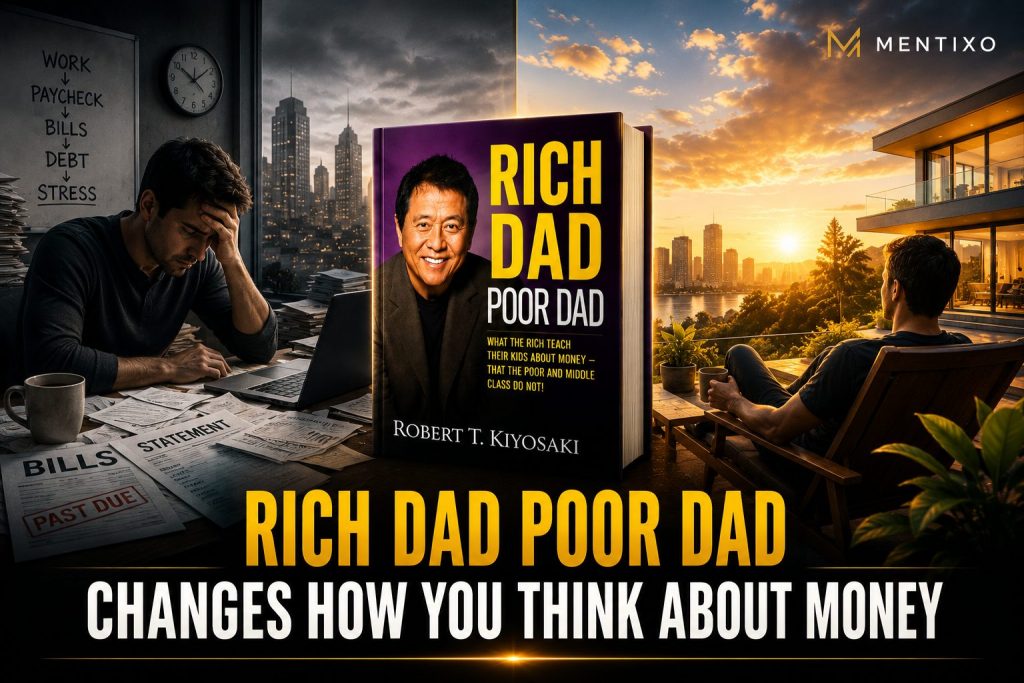
Rich Dad Poor Dad by Robert Kiyosaki is one of the most influential personal finance books ever written.
For millions of people, this book was the first introduction to concepts like:
- financial freedom
- investing
- passive income
- entrepreneurship
- assets and liabilities
The book challenges traditional beliefs about money and explains why many hardworking people struggle financially despite earning decent incomes.
Its lessons are simple, but they can completely change how you think about wealth.
Let’s explore the most valuable money lessons from the book.
💰 Lesson 1 — Rich People Buy Assets
This is arguably the most famous lesson from the entire book.
Kiyosaki explains:
Rich people buy assets.
Poor and middle-class people buy liabilities.
An asset puts money into your pocket.
Examples:
- businesses
- stocks
- ETFs
- rental properties
- digital products
- royalties
A liability takes money out of your pocket.
Examples:
- expensive cars
- luxury purchases
- consumer debt
- things bought only to impress others
One of the biggest mistakes people make is confusing possessions with assets.
Just because something is expensive doesn’t mean it makes you richer.
True wealth is created when your assets generate income even when you’re not working.
🔧 Tool: Learn Investing Basics
If you want to better understand investing:
One of the best free resources for beginners.
💰 Lesson 2 — Financial Education Is More Important Than Income
Many people believe:
“If I earn more money, my financial problems will disappear.”
Unfortunately, that isn’t always true.
There are doctors, lawyers, athletes, and celebrities who earn millions and still go broke.
Why?
Because income alone doesn’t create wealth.
Financial education matters more.
You need to understand:
- investing
- taxes
- cash flow
- debt
- risk
- asset allocation
The book argues that schools teach people how to:
- get jobs
- pass exams
- earn salaries
But rarely teach:
how money works.
That gap creates financial problems for many people.
💰 Lesson 3 — The Rat Race Is Real
One of the most memorable concepts in the book is:
The Rat Race.
The cycle looks like this:
- Get a job
- Earn money
- Spend money
- Need more money
- Work harder
- Repeat forever
Many people spend decades trapped in this loop.
As income increases:
expenses increase too.
New car.
Bigger house.
More subscriptions.
More debt.
The result?
Despite earning more, many people never feel financially free.
The lesson:
Higher income does not automatically create wealth.
🔗 Related Resource
👉 www.mentixo.com/how-to-escape-the-9-to-5/
💰 Lesson 4 — Make Money Work for You
Most people work for money.
Wealthy people focus on:
making money work for them.
This is one of the biggest mindset shifts in the entire book.
Instead of asking:
“How can I earn more?”
Ask:
“How can I build assets that generate income?”
Examples:
- investments
- businesses
- rental properties
- digital products
- intellectual property
The goal is to create income sources that continue generating value over time.
🔧 Tool: Track Your Net Worth
One of the easiest ways to stay financially aware:
Tracking net worth helps you focus on building assets instead of just increasing income.

💰 Lesson 5 — Fear Keeps Most People Poor
According to Kiyosaki, one of the biggest obstacles to wealth isn’t lack of money.
It’s fear.
People fear:
- failure
- investing
- losing money
- starting businesses
- taking risks
As a result:
they stay in situations they dislike because they feel safe.
The book encourages readers to become financially educated so they can make smarter decisions rather than living in fear.
Important:
This doesn’t mean taking reckless risks.
It means learning enough to make informed decisions.
💰 Lesson 6 — Opportunities Are Everywhere
One interesting lesson from Rich Dad Poor Dad is that wealthy people often see opportunities where others see problems.
For example:
Most people see:
- economic uncertainty
- competition
- challenges
Entrepreneurs often see:
- market gaps
- unmet needs
- new possibilities
This mindset doesn’t happen automatically.
It develops through:
- learning
- experience
- financial education
The more you understand money,
the more opportunities you begin to notice.
🔗 Related Resource
👉 www.mentixo.com/how-to-find-your-first-profitable-business-idea/
💰 Lesson 7 — Your House Is Not Always an Asset
This is one of the book’s most controversial ideas.
Many people are taught:
“Your house is your biggest asset.”
Kiyosaki challenges this.
He argues that if your house:
- costs money every month
- generates no income
then it may function more like a liability than an asset.
Many financial experts debate this point.
However, the lesson is valuable because it forces people to ask:
Is this purchase making me richer or poorer?
That’s a powerful question before any major financial decision.
🔧 Tool: Calculate Investment Growth
Want to see how money compounds over time?
https://www.calculator.net/investment-calculator.html
This helps visualize how consistent investing can grow over years and decades.
💰 Lesson 8 — Build Multiple Income Streams
One paycheck creates vulnerability.
Multiple income streams create stability.
That’s why many wealthy people have:
- investments
- businesses
- side projects
- royalties
- dividends
If one source slows down,
others continue producing income.
This doesn’t happen overnight.
But gradually building multiple income streams can significantly improve financial security.
🔗 Related Resource
👉 www.mentixo.com/how-to-build-multiple-income-streams/
💰 Lesson 9 — Learn Before You Earn
One of the smartest lessons in the book:
Skills often create more wealth than money.
Kiyosaki encourages people to develop:
- sales skills
- communication
- negotiation
- leadership
- marketing
- financial literacy
Why?
Because skills can create opportunities repeatedly.
Money can be lost.
Skills stay with you.
💰 Lesson 10 — Financial Freedom Is the Real Goal
Many people chase:
- bigger salaries
- expensive lifestyles
- status symbols
But the ultimate goal isn’t more stuff.
It’s:
freedom.
Financial freedom means having enough assets and cash flow to support your desired lifestyle without depending entirely on active work.
That’s the destination the book encourages readers to pursue.
Not luxury.
Not status.
Freedom.
🏆 The Biggest Lesson From Rich Dad Poor Dad
If you remember only one lesson from this book, make it this:
Focus on acquiring assets.
The wealthy don’t become rich because they spend more.
They become rich because they own more.
Assets create:
- cash flow
- opportunities
- financial security
- long-term wealth
That’s the central message behind Rich Dad Poor Dad.
And it’s the lesson that continues to inspire millions of readers around the world.
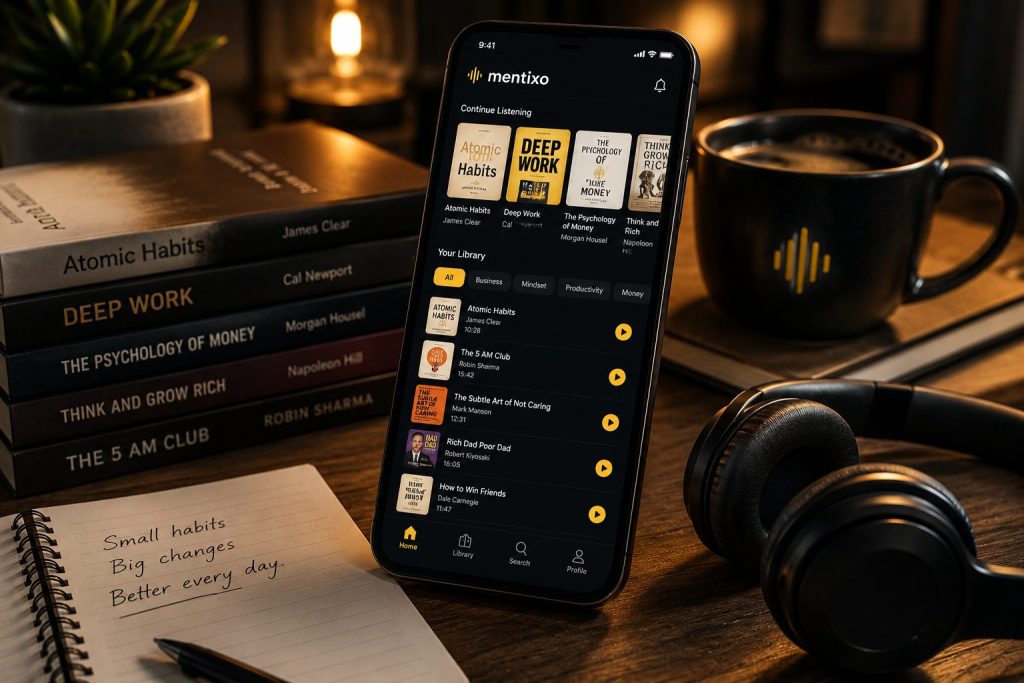
🎧 Want the Full Audio Summary?
This article only covered a few of the most important lessons from Rich Dad Poor Dad.
Inside Mentixo, you’ll find:
✔ 10-minute audio summaries
✔ practical lessons from bestselling books
✔ money, business, psychology & self-improvement insights
✔ actionable ideas you can apply immediately
🚀 Start with a FREE 30-day trial.
Learn faster. Think smarter. Build wealth with better ideas.
👇 Explore the full audio library:
📚 Continue Reading
👉 www.mentixo.com/rich-dad-poor-dad-explained/
👉 www.mentixo.com/how-to-build-multiple-income-streams/
👉 www.mentixo.com/why-most-people-never-become-rich/
👉 www.mentixo.com/how-rich-people-think-differently/
👉 www.mentixo.com/the-psychology-of-wealth/